There's something magical about handing a reader your book in person. You see their face light up. You sign the title page. You have a real conversation about your characters or your research or what inspired you to write this story.
And here's the bonus: you make significantly more money per copy than you ever would through Amazon or traditional retail.
Welcome to the world of physical direct sales, where authors become their own bookstores.
What are Physical Direct Sales?
Physical direct sales means buying printed copies of your book at wholesale prices and selling them yourself. This could be:
- At book fairs, conferences, and author events
- Through your own website with direct shipping
- At local farmers markets, craft fairs, or pop-up shops
- Out of the trunk of your car (yes, really)
- At book signings in local bookstores or libraries
- Through speaking engagements and workshops
Unlike digital direct sales (where you sell ebooks from your website), physical direct sales involve inventory, shipping, and face-to-face interactions. It's more work upfront, but the profit margins and personal connections make it worthwhile for many authors.
Why Sell Physical Books Directly?
Higher Profit Margins
When you sell through Amazon or bookstores, your cut is small after everyone else takes their share. When you buy author copies in bulk and sell them yourself, you keep 100% of the retail price minus your printing costs.
Real Reader Connections
Nothing builds a loyal fanbase like meeting readers in person. They remember the conversation. They tell their friends. They become advocates for your work.
Complete Control
You set your own prices. You decide where and how to sell. You create the buying experience. No algorithms, no retailer policies, no waiting for approvals.
Perfect for Series and Bundles
Selling in person lets you create special offers. Bundle the whole series. Offer signed editions. Create custom packages that online retailers would never allow.
Ideal for Niche Markets
If you write for a specific community (homeschoolers, quilters, military veterans, local history buffs), you can go directly to where those readers gather.
Calculating Your Profit
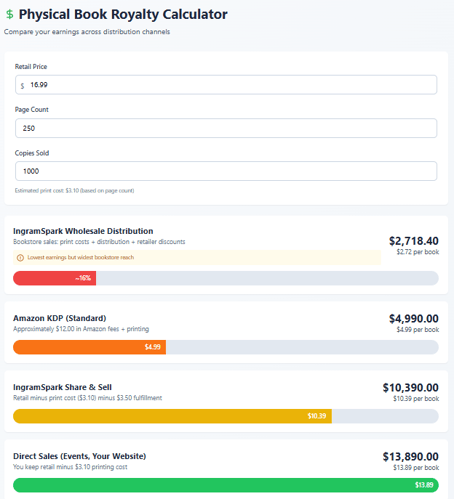
Let's say you write a 250-page paperback that retails for $16.99.
Through IngramSpark Wholesale Distribution:
- Retail price: $16.99
- After print costs, distribution fees, and retailer discounts
- Your royalty: approximately $2.72 per book (16% of retail)
Through Amazon KDP (standard royalty):
- Retail price: $16.99
- Amazon's cut and printing: approximately $12
- Your royalty: $4.99 per book
Through IngramSpark Share & Sell:
- Retail price: $16.99
- Print cost plus $3.50 fulfillment fee
- Your profit: approximately $9.99 per book
Buying author copies and selling direct:
- Retail price: $16.99 (you set this)
- Author copy cost from KDP Print: approximately $3.50
- Your profit: $13.49 per book
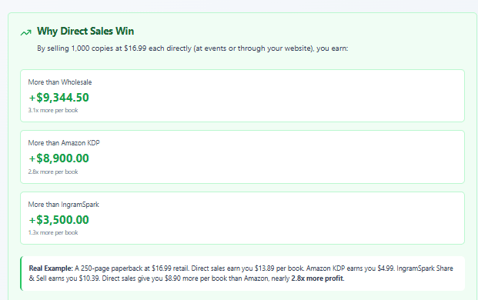
That's nearly 5 times more profit per copy than IngramSpark wholesale distribution, and nearly 3 times more than Amazon KDP. Even compared to IngramSpark's own ecommerce platform, you earn 35% more by selling direct.
Of course, this doesn't account for your time, travel costs, or event fees. But even after those expenses, most authors find direct sales far more lucrative than relying solely on online royalties.
Where to Sell Your Books
Book Fairs and Literary Festivals
Events like local book festivals, comic cons, and literary conferences draw readers actively looking to buy books. Research events in your area, apply for vendor tables, and show up ready to engage.
Typical costs: $50 to $300 for table space Typical sales: 10 to 100+ books depending on event size and your marketing
Farmers Markets and Craft Fairs
Don't overlook non-book events. Many authors successfully sell at farmers markets, craft fairs, and community festivals where people are in a buying mood.
Tips for success:
Create eye-catching table displays
Offer bundle deals
Have bookmarks or postcards for people who don't buy
Be prepared to pitch your book in 30 seconds
Speaking Engagements
If you speak at conferences, workshops, or community groups, always bring books to sell afterward. People who just heard you speak are your warmest leads.
Local Bookstores and Libraries
Many independent bookstores will let you do signings and keep a larger percentage if you supply the books yourself. Libraries often host author events with book sales.
Your Own Website
Set up a simple online store where readers can buy signed copies directly from you. You handle shipping, but you also keep all the profit.
Tools to consider:
Shopify or WooCommerce for a full store
Square Online for simple setup
Networking Events and Meetups
Writing groups, professional associations, book clubs, and community organizations are all potential venues. Don't be pushy, but don't be shy about mentioning your book either.
Setting Up for Success: What You Need
Display Materials:
Tablecloth (make it eye-catching)
Book stand or easel to display your cover
Business cards and bookmarks
Sign with your name and book title
Price list (make it visible)
Payment Processing:
Square Reader or similar mobile payment device
Cash box with change
Venmo/PayPal QR codes for digital payments
Receipt book or digital receipt system
Marketing Materials:
Postcards or bookmarks to give away
Sign-up sheet for your email list
Promotional materials for your other books
Banner or backdrop if budget allows
Inventory Management:
Storage space at home for book inventory
Plastic bins or boxes for transporting books
Hand truck or cart for hauling (books are heavy!)
Inventory tracking system (even a simple spreadsheet works)
Managing Inventory Without Going Broke
The biggest fear authors have about direct sales is getting stuck with boxes of unsold books. Here's how to manage that risk:
Start Small
Order 25 to 50 copies for your first event. See how they sell. Adjust from there.
Track Your Sales by Event
Keep records of which events sold well and which didn't. Double down on what works.
Offer Pre-orders
If you're planning a big event, promote pre-orders on social media. Only print what you've already sold.
Store Smart
Books don't take up as much space as you think. A box of 50 paperbacks fits in a closet. Climate control isn't critical unless you live somewhere extremely humid.
Use Consignment When Possible
Some bookstores will take your books on consignment (you get paid when they sell). This reduces your upfront inventory risk.
Pricing Strategies That Work
The Standard Approach: Match Amazon's retail price. Readers expect this and won't question it.
The Bundle Deal: Offer series bundles at a discount. "Buy all three books for $40 instead of $51."
The Signed Premium: Charge $2 to $5 more for signed copies. Many readers happily pay extra for a personalized signature.
The Event Special: Create an event-only price. "Today only, $15 instead of $17.99."
The Cash Discount: Offer a small discount for cash payments to avoid credit card fees.
Handling Logistics
Shipping from Your Website:
Use USPS Media Mail (cheapest option for books)
Factor shipping costs into your price or charge separately
Invest in a small postal scale
Keep bubble mailers and boxes on hand
Print shipping labels at home using Pirate Ship or PayPal
Traveling to Events:
Invest in a sturdy rolling cart or dolly
Pack books in plastic bins (easier than cardboard)
Bring more inventory than you think you'll need
Keep a "go bag" with all your display materials ready
Tracking Sales and Taxes:
Keep receipts for all book purchases and event fees
Track sales by event in a spreadsheet
Understand your state's sales tax requirements (many states require you to collect sales tax)
Consult an accountant about deducting expenses
Common Mistakes to Avoid
Ordering Too Many Books Too Soon
Start with small print runs until you know your sales velocity.
Underpricing Your Books
Don't undercut your own value. Readers expect to pay retail price, especially for signed copies.
Poor Table Presentation
Invest in a nice tablecloth and display. First impressions matter.
Not Collecting Email Addresses
Every person who stops at your table is a potential long-term reader. Get their email.
Forgetting About Expenses
Track your costs carefully. Event fees, gas, printing, and shipping add up.
Being Too Salesy
Let your enthusiasm show, but don't be pushy. Readers can feel desperation.
The Bottom Line
Physical direct sales won't replace your online income, but they can significantly supplement it. More importantly, they connect you with real readers who will remember you, recommend you, and come back for your next book.
You don't need to quit your day job and become a full-time book fair vendor. But selling 20 books at $13 profit each at a local festival? That's $260 for a Saturday morning. Do that twice a month and you've added over $6,000 to your annual author income.
And unlike Amazon royalties that trickle in over months, direct sales put cash in your pocket immediately.
Getting Started in 3 Steps
Ready to give it a try? Here's your action plan:
Step 1: Order 25 author copies of your best-selling book. Get comfortable with the idea of having physical inventory.
Step 2: Research local events in the next 3 months. Book fairs, craft shows, library events. Apply for one vendor table.
Step 3: Create a simple table setup. Tablecloth, book stand, payment processing, business cards. Keep it simple for your first event.
Then show up, smile, and talk to people about your book. You'll be surprised how many readers are thrilled to meet a real author and support you directly.
The question isn't whether direct sales are worth the effort. It's whether you're ready to stop leaving money on the table and start building real relationships with your readers.
Next Steps: Want to maximize your author income? Check out our companion article on selling ebooks directly to learn how digital direct sales can complement your physical book strategy.
The Bottom Line
The key here isn't to abandon Amazon or IngramSpark. They provide visibility and discoverability you can't get on your own. Readers browse Amazon. Bookstores order through IngramSpark. These platforms help people find your book. But direct sales should be part of your strategy too. Use Amazon and IngramSpark for reach, and use direct sales at events and through your website to maximize profit on every sale you can control. It's about diversification, not choosing one over the other.

Elona Washington
Elona Washington is an accomplished author, inspirational speaker, and dedicated #metoo activist. With over 20 years of marketing experience, nine in self and traditional publishing, this three-time bestselling author has designed award-winning marketing campaigns for New York Times and USA TODAY bestselling authors.